EN


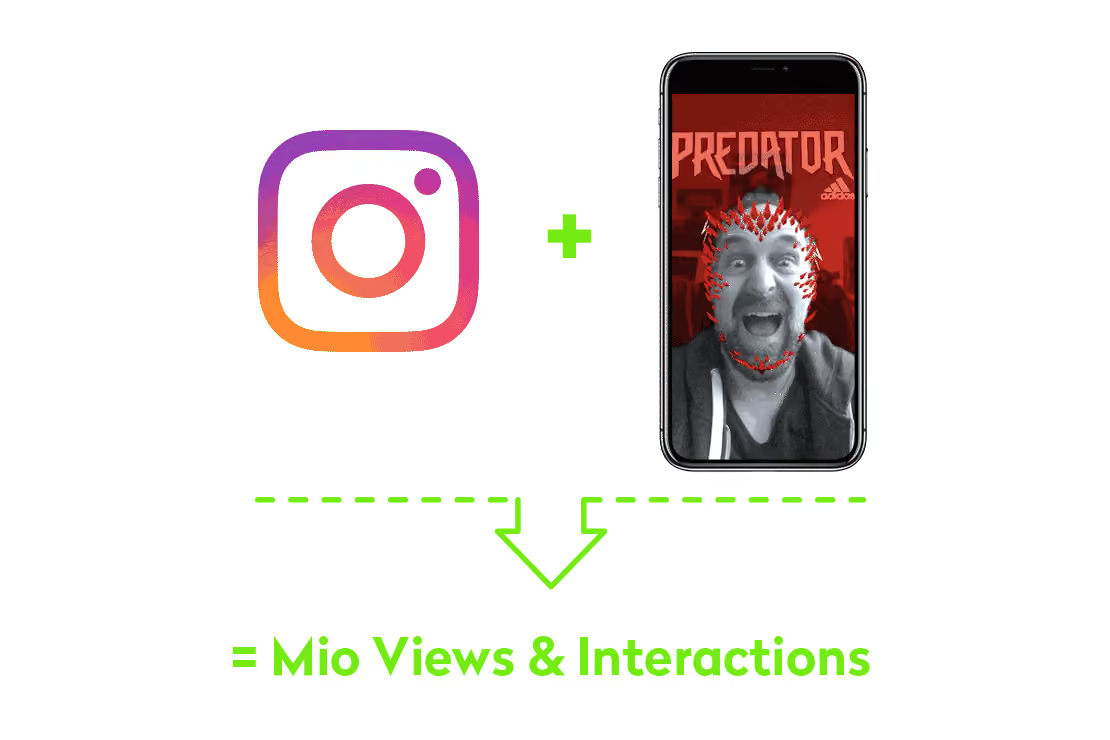
A major trend is the so-called AR effects on Instagram. Anyone striving to increase their follower count should be inspired by these creative filters and spice up their posts with them. After all, there is plenty to choose from! It’s long been the case that not only influencers and celebrities, but also friends, acquaintances, and colleagues are using these various effects. Due to the high user frequency, the creators (i.e., the inventors) of AR filters are reaching a new dimension of popularity. Take Filippo Soccini, for example, who, according to SocialMediaToday, had about 7,000 Instagram followers at the beginning of the year when he released his "In 2020 I will be" filter. That number has since grown to 111,000.
Without having to install additional apps, you can display product information and multimedia content within the Instagram app, whether in-store or in out-of-home (OOH) settings. Example: A customer is in a bike shop, but no salesperson is available. The customer scans a visual marker (e.g., a QR code) with their smartphone and immediately receives information about the bike, such as specifications, marketing info from testimonials, videos, and more. The AR filter acts as a modern, contemporary form of information.
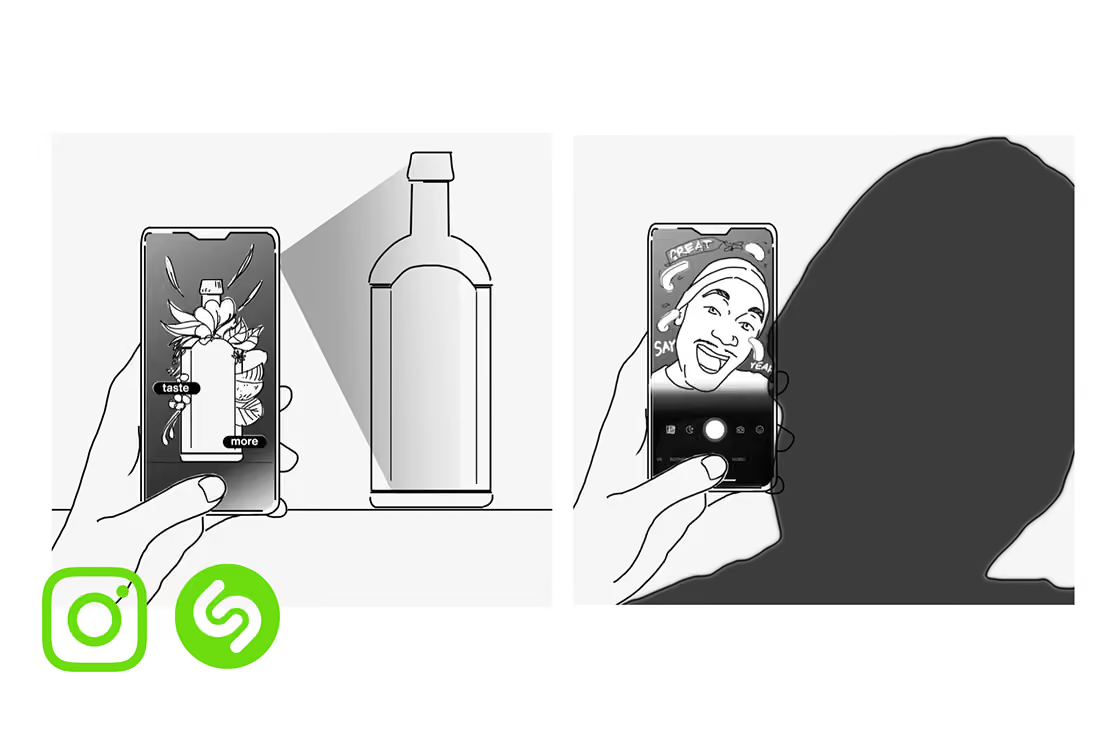
With smartphones and AR filters, objects and contexts can be made tangible, supplemented, and expanded in a multimedia and immersive way—in schools and museums, as well as in work or leisure environments—without technical hurdles like training or explanations. Museum example: If you scan the filter on an art object, you can dive three-dimensionally into its history, materiality, and craftsmanship. In this way, further information can be accessed individually and easily without additional technical tools or personnel effort.
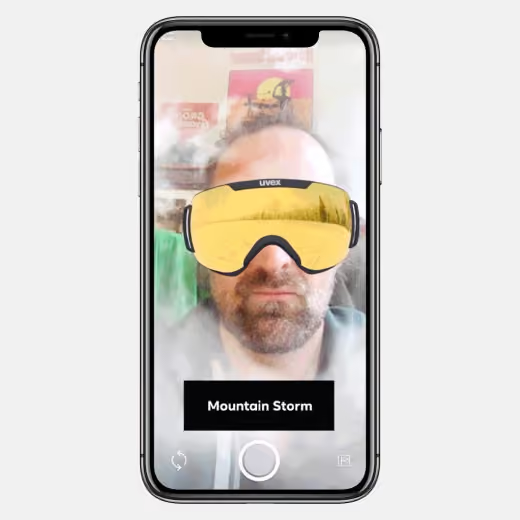
The original function of Instagram filters—face and body filters—still holds significant potential. Especially for the head and upper body, the selfie cam allows users to try on and test a variety of products, particularly regarding their appearance. Our ski goggle test example illustrates this perfectly. Users can display product information by opening their mouths, for instance. Tapping allows them to switch between goggle models and weather conditions. Additionally, various facial expressions can be used as triggers: e.g., blinking, sticking out the tongue, showing teeth, smiling, kissing, nodding, tilting the head, etc.
A brand-new field in the realm of Instagram AR filters is the world of gaming. Elements on the smartphone screen can be controlled via facial expressions and gestures. To illustrate this, we built a simple hit-and-run surf game. The surfer is controlled by blinking and must dodge obstacles. Here, too, there is great potential for many fun as well as practical (e.g., educational) applications.

To illustrate this, we built a simple hit-and-run surf game. The surfer is controlled by blinking and must dodge obstacles. Here, too, there is great potential for many fun as well as practical (e.g., educational) applications.
Try out our filters, browse through Instagram, and get inspired. If you would like to know more about this exciting topic, we would be happy to advise you. Whether as a marketing, sales, or service tool – we will work with you to conceive and produce an exciting, contemporary project or product.